
The way of recruitment process has undergone significant changes from the past. In the past, newspaper or other kinds of printed media advertisement and internal referral were initial attempts to fill in job vacancies (Singh & Finn, 2003), which fairly lacked efficiency and accuracy. During the interview process, telephonic and face-to-face interview were typically conducted with candidates. However, the modern technology development has greatly replaced the old ways these days. Numerous job-hunting websites have been developed to display up-to-date job advertisements, where recruitments of all types are organised systematically and can be filtered by candidates according to industries, locations, requirements and even salaries. For some companies, such as Google and Amazon, who perform their business on a national or global scale, they would have a career page on their own official websites where the latest wanting jobs would be released (Google, 2020; Amazon, 2020). When it comes to the job application screening, effective methods like online testing, video interviewing are used to minimize the possible negative circumstances. With the assistance of internet, on-site meeting arrangements can be largely reduced because the online testing system automatically helps preliminary filtering process. Additionally, video interviewing provides both candidates and recruiters with more flexibility when they are not convenient for face-to-face interview. In the future, data-driven recruiting is an inevitable trend for company once the automation technology is sufficiently developed (Finances Online, 2020). Related computer programmes are helpful in analysing workforce demand and making the hiring plan. In this way, the whole recruiting activities are smarter with higher efficiency than before.

As for employee appraisal, an annual performance review of employees from HR managers is gradually replaced by frequent and real-time feedback, which can be provided via applications and software since 2011 (Cappelli & Tavis, 2016). According to Susan Peters, the head of Human Resources of GE, annual cycle is no longer a typical feature for business (Nisen, 2015), which indicates that the short-term and timely feedback would be more practical for the changing business environment. Under the circumstances, HR systems, such as HR Services developed by EconSys (EconSys, 2018), are designed to provide effective performance review by facilitating the communications amongst employees, supervisors and HR on a time base varying from 7 to 90 days. Additionally, all the relevant data is stored and searchable in database for further goal setting and performance evaluation. During the review, project milestones can be reported on time by the employees, linking individual goals to the company’s missions. Therefore, the system enables managers to conduct the continuous performance and completion tracking, ensuring all the business activities are on the right way. In the future, HR system may be improved beyond what it can do now. OpenAI, an artificial intelligence (AI) software developed by LinkedIn, is expected to give subjective review to the employee by learning massive data of objective cases (Wiblin & Harris, 2018).
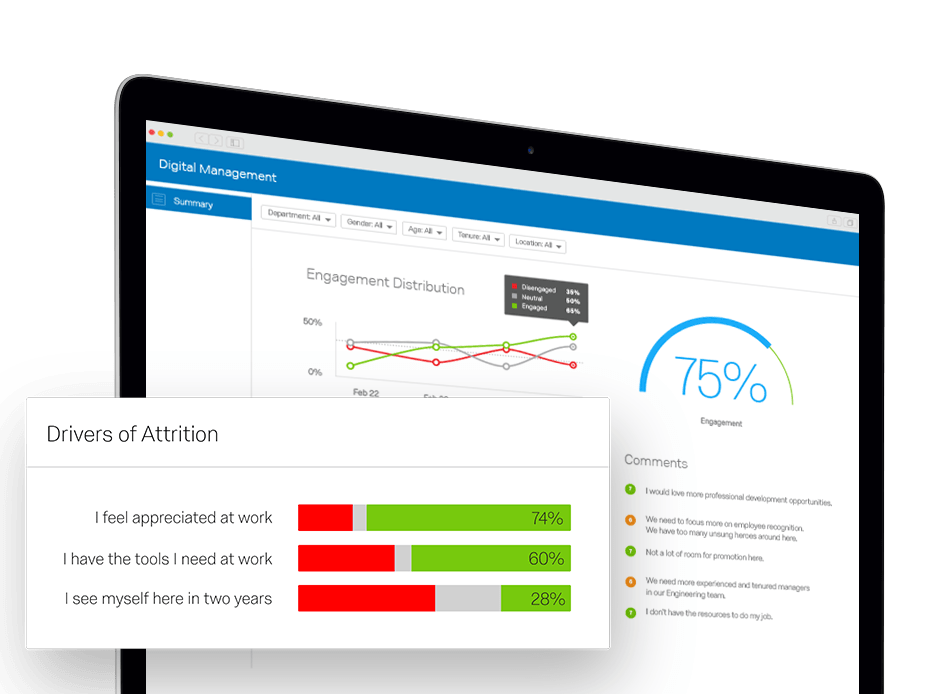
With regards to employee training, new trends of a more competitive business environment force the traditional training methods to change. In the past, training programmes were normally classroom or instructors oriented (Christianne & Kleine, 1994). A series of guiding videos, brochures and some quizzes would make for the whole training packages. However, since most of the companies are developing themselves to be more geographically covered, the company structure becomes more decentralised at the same time (Nichols, 2018), making on-site training inconvenient and less realistic to be conducted. Thus, distance training and AI system are here to give a hand. Video conferencing is usually seen as one of the useful methods of distance training when trainees are located differently. In terms of AI system, Mastercard has developed its own AI advisors to help their staff solve the problems of potential clients. When unfamiliar situations encountered, employees can consult with the advisor system for the possible solutions to their problems. New data would be stored after the problem solved, serving for a possible decision for next time (Kharpal, 2016). In the future, Virtual Reality and Augmented Reality would be probably used in employee training activities, providing the trainees with a simulated real-time occurrence for quicker learning (Gethppy, 2018).

In conclusion, the methods of managing the human capital for HR has undergone from traditional to more cutting-edge with efficient information technology system. Different digital technology is adopted from recruitment to employee training and more than these, greatly contributing to higher working efficiency and better business performance. In the future, these tools would be promisingly developed to a more advanced stage.
References
Amazon. (2020). Amazon jobs. Retrieved February 7, 2020 from https://www.amazon.jobs/en-gb
Cappelli, P., & Tavis, A. (2016, October 1). The Performance Management Revolution. Harvard Business Review. Retrieved from https://hbr.org
Christianne, D., & Kleine, B. H. (1994). New Developments in Employee Training. Work Study. Emerald Insight, 43(2), 13–16. doi: 10.1108/EUM0000000004315
Econsys. (2018). Federal and State HR service. Retrieved February 7, 2020 from https://www.econsys.com/hr-services/
Finances Online. (2020). 10 Recruitment Trends for 2020: Latest Predictions You Should Be Thinking About. Retrieved February 7, 2020 from
https://financesonline.com/recruitment-trends
Gethppy. (2018). New Technologies in Employee Training. Retrieved February 7, 2020 from
Google. (2020). Google Careers. Retrieved February 7, 2020 from
https://careers.google.com/jobs/
Hayton, E. (2019, July 13). 8 Tips For A Successful Digital HR Transformation. [Weblog]. Retrieved from https://harver.com/blog/digital-hr-transformation/
Jobsoid. (2020). Recruitment Process. Retrieved February 13, 2020 from
Kharpal, A. (2016, March 3). MasterCard using AI to turn staff into top sellers. CNBC. Retrieved from https://www.cnbc.com
Nisen, M. (2015, August 13). Why GE had to kill its annual performance reviews after more than three decades. Quartz. Retrieved from https://qz.com
Nichols, M. R. (2018). How has technology changed employee training and continuing education. Retrieved February 7, 2020 from
https://trainingmag.com/how-has-technology-changed-employee-training-and-continuing-education/
Qualtrics. (2020). Real-time employee engagement insights and action planning. Retrieved February 13, 2020 from https://www.qualtrics.com/uk/employee-experience/employee-engagement/?rid=ip&prevsite=en&newsite=uk&geo=GB&geomatch=uk
Sirensearch. (2019, August 22). Why Your Company Needs Digital Marketing Training. [Weblog]. Retrieved from https://www.sirensearch.co.uk/2019/08/22/why-your-company-needs-digital-marketing-training/
Singh, P., & Finn, D. (2003). The Effects of Information Technology on Recruitment. Journal of Labor Research, 24(3), 395–408. doi: 10.1007/s12122-003-1003-4
Wiblin, R., & Harris, K. (2018, October 2). Dr Paul Christiano on how OpenAI is developing real solutions to the ‘AI alignment problem’, and his vision of how humanity will progressively hand over decision-making to AI systems. 80000 Hours. Retrieved from https://80000hours.org/


Hi Golf,
I have learned a lot about the changes in HR from your article. Absolutely, the operating way of HR has been affected by technologies which improve working efficiency and reduce costs, resulting in transforming traditional HR to digital HR.
As for your first part, the data-driven recruiting is likely to be achieved in the future, and it will optimize the whole recruitment process to be more intelligent and high-efficient. So, I search about what can the data-driven recruiting help to improve hiring process. An article on Workable mentioned that data-driven recruiting helps HR from 6 aspects: allocating budget, increasing productivity and efficiency, unearth hiring problems, benchmark and forecast hiring results, providing more objective hiring decisions, and optimizing recruiting process (https://resources.workable.com/stories-and-insights/data-driven-recruiting-101). Moreover, I also curious about whether the whole recruitment process will not be control by human if the recruiting system is highly intelligent?
While for the employee training, the problem of long-distance training can be solved by internet. However, are the effects of using distance training tools such as video conference better than on-site training? At present, many companies are still using on-site training rather than video conferencing training. By adopting video conferencing training, new problems may occur in the training. For example, technical problems could impact on training programs negatively, and the costs of establishing online training platforms might be expensive.
LikeLike
Thank you Molly for your comment and further information. Regarding your curiosity about recruitment process, from my perspective, although the technology will be highly developed in the future, it could not replace human anyway. it is mainly because the computer cannot predict and know human thought. From my personal experiences when being interview at the workplace, the recruiter would notice the candidate reaction, thought, logical thinking while they are talking with us. Furthermore, recruiter also needs to ensure that each candidate would be able to fit the organisational culture. Therefore, technology could not perform these kinds of task like human. However, it could facilitate and reduce the unnecssary recruiting process. Yet, Human is still needed for this kind of job.
As for second question related to online training, the online training is sometimes better on-site training since it could be conducted in a different place at the same time. For example, the company might give a training to employee located in Asian countries such as Thailand, China, Japan, and Korea. with on-site training it is impossible to conduct at the same time. Moreover, the trainer could ensure the participant understanding by distributing the test after the training.
Therefore, the result of on-site and online training is not different from my perspective. Lastly, the cost of online training is still cheaper than on-site training since the company does not need to provide flight ticket, hotel, allowance and many more for coach.
LikeLiked by 1 person
Hi Pavit. Regarding your first part, I strongly agree that in job application screening, digital technology reduce on-site meeting arrangements and increase interview flexibility. I think another reason for HR to make their work efficient is that HR can use AI technology like chatbots to help them screen candidates. For example, when the candidate not ensure whether the company provides a work visa, the chatbot can accurately answer the candidate’s question, which avoids additional work for HR.
In your final part, you mentioned that digital systems currently solve problems of remote training for organizations, and trainees will be exposed to more advanced technologies (Virtual Reality and Augmented Reality) in the future. However, I have a question that in the application of such technologies, is the role of HR a trainee or a manager who trains employees? How does this technology specifically change HR identities in the future compared to today?
LikeLike
Hi Yingxuanhuang,
Thank you for your comment and question. you are right that HR task could be more simplified with the use of AI. Regarding your question about role of HR, From my personal experience, Training program can be held by HR themselves and specialist trainer depending on the topic. For example, the company that I used to work for, HR department gave me the training about the topic of collaboration at workplace.
As for the second question of HR identities, I think HR’s identity will remain the same. However, with the help of VR technology would bring HR and participant closer and more connected particularly for those who live in a different place. Moreover, VR technology could reduce the task of HR to prepare activity in the training session because it could offer virtual activity. For example, collaboration activity requires participant to build a house, they could see the virtual material and build the house by their hand without touching actual object. Therefore, it strengthens the interaction and bring immersive experience to HR trainer and participant.
LikeLike
Hi Pavit,
Thank you for such an interesting blog post. I never realised how far the HR role had evolved so much with the advancements of the digital economy!
Regarding your paragraph in relation to employee training, I firmly agree with your view that with more expansion from businesses this can make on-site training more difficult. I would also like to point out that I have recently had to complete an online training course (as I work for a large organisation) and what I found was that I was far less engaged with just reading articles on a screen and completing a simple quiz at the end. Having someone face-to-face explaining information to me is more stimulating in my opinion and is more likely to stay with me but i note that this can be highly dependant on the type of learner someone is.
This article by Kemp and Grieve (2014 – https://www.researchgate.net/publication/268877757_Face-to-face_or_face-to-screen_Undergraduates'_opinions_and_test_performance_in_classroom_vs_Online_learning) researched the differences between online and face-to-face learning and found that the effectiveness of each method varies based on the type of leaarner some is.
Would it not therefore be most effective for companies to use technology such as Skype to get the advantages of both worlds? This both involves face-to-face interaction as well has the convinience of the internet to get over geological difficulties. This may cost the business more in the short term to invest in the technology but if the training is more effective, this should offset these costs in the long term.
LikeLiked by 1 person
Hi Natbaes,
Thank you for sharing your valuable experience. I agree that some companies nowadays begin to let employ self-training such as LinkedIn. However, the company that I used to work for they still give both on-site training job and online training job from time to time.
LikeLike