The Brief of Airbnb History
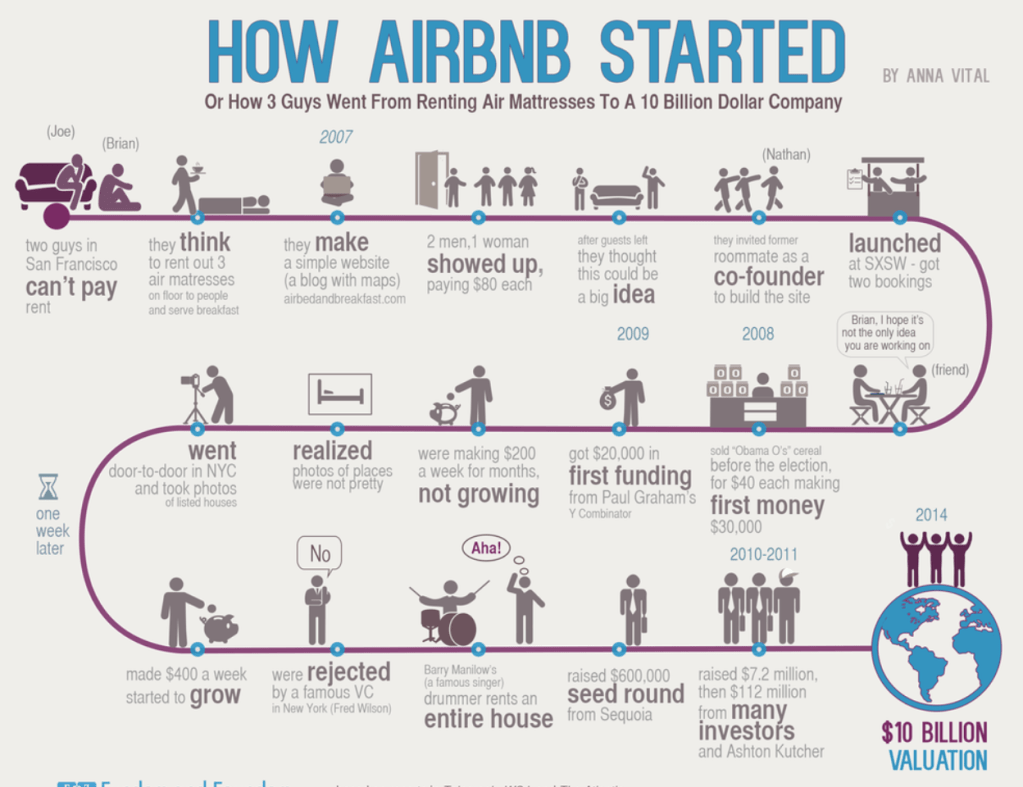
Figure 1: Airbnb timeline history. Reprinted from http://notes.fundersandfounders.com/post/82297315548/how-airbnb-started
Initially started with the idea of renting out a few of air mattresses for their rental payment, Joe Gebbia and Brian Chesky asked their old roommate Nathan Blecharczyk to establish Airbnb in San Francisco in 2008 (Aydin, 2019). Although the business plan was rejected several times by the investors (Chesky, 2015) and did not look good to the users at first (Thompson, 2013), the company, later on, transformed itself into the biggest marketplace for sharing houses and lodging in the world within a few years (Sherwood, 2019), which also announced its plan of going public in 2020 (Airbnb, 2019).
A Disruption to Lodging
Through the Internet, Airbnb provides the hosts with a place to promote their unoccupied houses, where the guests have access to make a reservation via either Airbnb official website or the phone application. According to the statistics, there are more than 7 million rentals across 100,000 cities throughout the world listing on Airbnb today (AirbnbCitizen, 2020). Due to its advantages of affordable price (McCarthy, 2018), unique local experience (Thompson, 2013), customized options (Airbnb, 2020b) as well as using digital technology to expand the business, the company has great impact on the global hospitality industry, making itself a competitive challenger to the traditional travel services. According to Pitchbook, Airbnb was valued at $31 billion during its last round venture capital funding in 2017 (Pitchbook, 2019), almost three times higher than the total valuation of Hilton Hotels & Resorts and Marriot (Statista, 2019), both of whom are the leading hotel brands in the industry. Also, in 2019, Airbnb made up about 20 percent of the entire lodging market share in the US with more consumer spending than that of Hilton (Molla, 2019).
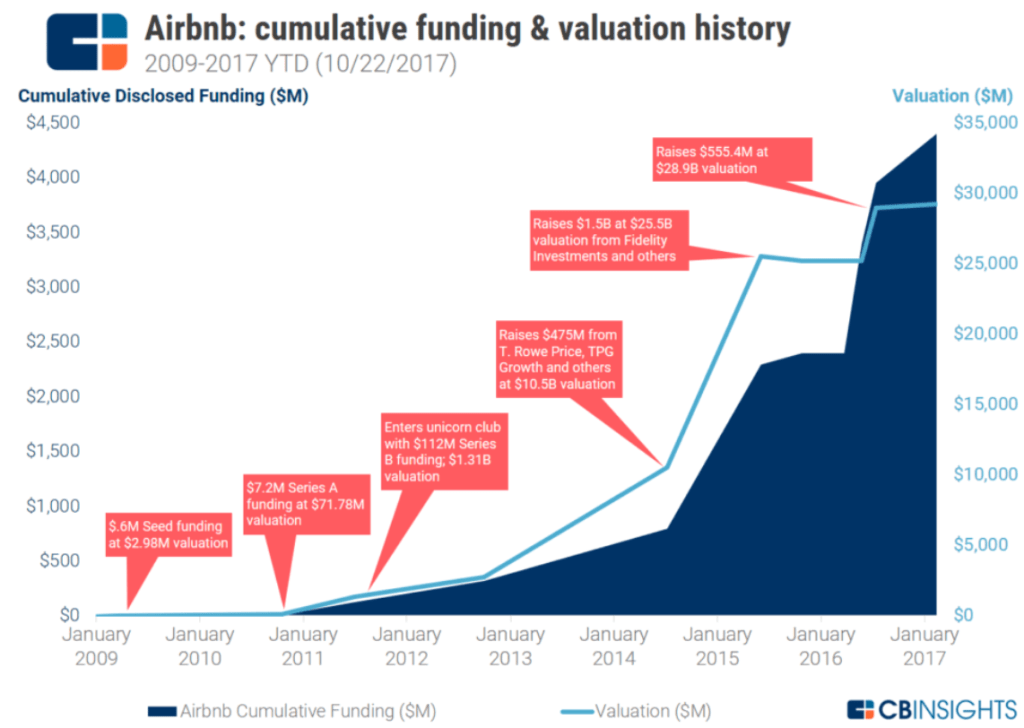
Figure 2: Airbnb valuation history. Reprinted from https://www.cbinsights.com/research/airbnb-strategy-teardown-expert-intelligence/
As an online lodging platform, the growth of Airbnb depends on the new and recurring users and their bookings. In other words, no investment would be considered on real estate, such as property purchase or building construction, which is significantly different from the traditional hotel brands (Forbes, 2018). Airbnb makes earnings by charging guests between 6 to 12% of service fees depending on reservation size and 3% of guest’s payment process for hosts (Nath, 2019). Therefore, the company mainly focus on the acceleration and safety of the digital booking process to earn more users and sustainable cash flow (Thompson, 2013). Since its first funding, Airbnb has already accumulated cash at over $3 billion on its balance sheet (Palmer & Bosa, 2019), showing a healthy and promising financial status.
A Commercial Pioneer of Sharing Economy
Figure 3: Airbnb Sharing Economy. Reprinted from medium.com/@airgms/sharing-is-caring-the-positive-influence-of-the-airbnb-sharing-economy-61671d83e5e3
Apart from being a disruption to the industry, Airbnb is also known as one of the most pioneering examples of sharing economy (Kushmaro, 2017). It builds an online intermediate platform for the hosts and guest in exchange their needs of between extra earnings and a short-term rental within only a few clicks. To establish a trust relationship between the hosts and guests is the key component of the whole digital business model (Gebbia, 2016).
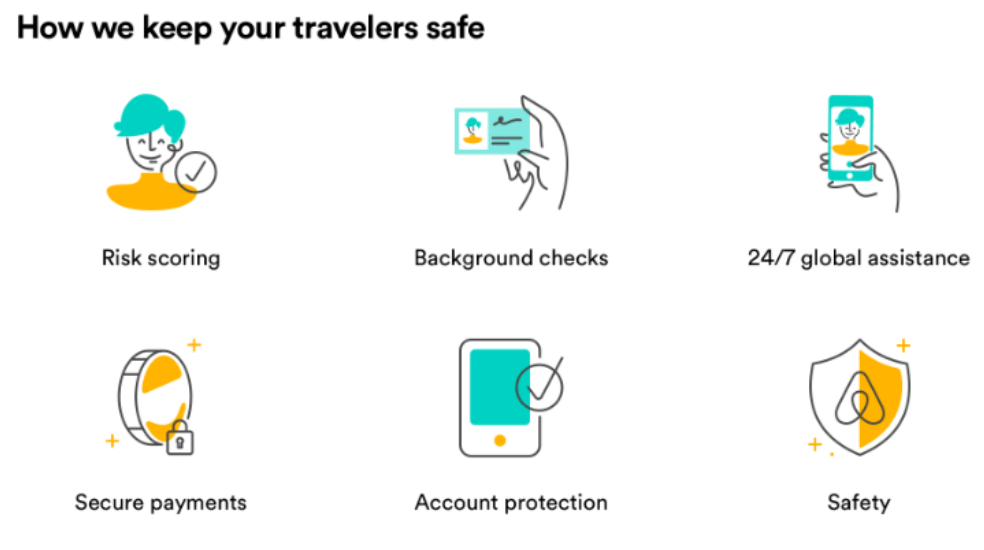
Figure 4: How we keep your travellers safe. Reprinted from https://www.airbnbforwork.co.uk/resources/how-airbnb-builds-trust-and-helps-keep-hosts-and-guests-safe?locale=en-GB
The trust of Airbnb consists of the platform itself and the hosts. While the trust of the platform is facilitated by its reliable system, the trust towards the hosts is generated by every experience and their reputation from guest reviews (Yang et al., 2019). To build the trust, Airbnb has provided insurance programs for hosts such as property damage, or injury worth up to 1$ million USD (Aribnb, 2020c). Moreover, Airbnb has created its Trust and Safety Department to facilitate the communication between hosts and guests throughout the whole digital booking process (Chesky, 2011). Most importantly, a well-designed reputation system on the platform from verified user profile, secure messaging to peer reviews is greatly contributing to the trust mechanism of the company (Airbnb, 2020a). Based on these online infrastructures, Airbnb has consolidated its position in sharing economy.
According to the recent study, travellers have a higher possibility to change their travelling patterns when experiencing the sharing economy services. For example, guests would tend to increase the frequency of travel and stay longer in the destinations, if the journey meet their expectation (Tussyadiah & Pesonen, 2016). The guests of Airbnb normally stay more than 2 days longer than hotel guests in New York City, helping $632 million generate in economic activity and $31 million contribute to the country sales taxes (Weller & Raafat, 2019).
The Future of Airbnb
In conclusion, Airbnb has certainly defined a whole new era of hospitality industry with its innovative digital business model. However, when it seems to draw attention from hotel customers and change their travel habits, some other serious issues are emerging. One of the biggest is about the legal issue (Coldwell, 2014). The company is being accused of creating unregulated rentals and worsening housing shortage by the local authorities in lots of cities (Coldwell, 2014; Carson, 2018). While it is trying to settle these problems and make more progress, the old big names of the industry would not stay still either. To stabilise itself in turbulent environment, Airbnb still has a long way to go.
References
Airbnb. (2019). Airbnb Announces Intention to Become a Publicly-Traded Company During 2020. Retrieved February 29, 2020 from https://news.airbnb.com/airbnb-announces-intention-to-become-a-publicly-traded-company-during-2020/
Airbnb. (2020a). Your safety is our priority. Retrieved February 29, 2020 from https://www.airbnb.co.uk/trust
Airbnb. (2020b). How do I use search filters?. Retrieved February 29, 2020 from https://www.airbnb.co.uk/help/article/479/how-do-i-use-search-filters
Airbnb. (2020c). Host Protection Insurance. Retrieved February 29, 2020 from https://www.airbnb.co.uk/host-protection-insurance
AirbnbCitizen. (2020). Airbnb Citizen Advancing home sharing as a solution. Retrieved February 29, 2020 from https://www.airbnbcitizen.com/?utm_source=airbnb&utm_medium=footer&utm_campaign=product
Aydin, R. (2019, September 20). How 3 guys turned renting air mattresses in their apartment into a $31 billion company. Business Insider. Retrieved from https://www.businessinsider.com
Chesky, B. (2011, July 28). On Safety: A Word from Airbnb. Tech Crunch. Retrieved from https://techcrunch.com
Carson, B. (2018, October 3). Old Unicorn, New Tricks: Airbnb Has A Sky-High Valuation. Here’s Its Audacious Plan to Earn It. Forbes. Retrieved from https://www.forbes.com
Coldwell, W. (2014, July 8). Airbnb’s legal troubles: what are the issues?. The Guardian. Retrieved from https://www.theguardian.com
Chesky, B. (2015, July 12). 7 Rejections. Retrieved from medium.com/@bchesky/7-rejections-7d894cbaa084#.krgg5souq
Forbes. (2018, May 11). As A Rare Profitable Unicorn, Airbnb Appears to Be Worth At Least $38 Billion. Forbes. Retrieved from https://www.forbes.com
Gebbia, J. (2016, April 5). How Airbnb designs for trust. Retrieved from https://www.youtube.com/watch?v=16cM-RFid9U
Kushmaro, P. (2017, January 17). Uber, Airbnb and the New Gig Economy. Business. [Weblog]. Retrieved from https://www.business.com/articles/philip-kushmaro-gig-economy/
Weller, C., & Raafat, A. (2019, January 25). A New Era of Lodging: Airbnb’s Impact on Hotels, Travelers, and Cities. Medium. Retrieved from https://medium.com/
McCarthy, N. (2018, January 23). Is Airbnb really cheaper than a hotel room in the world’s major cities?. Forbes. Retrieved from https://www.forbes.com
Molla, R. (2019, March 25). American consumers spent more on Airbnb than on Hilton last year. Vox. Retrieved from https://www.vox.com/
Nath, T. (2019, July 22). How Airbnb Makes Money. Investopedia. Retrieved from https://www.investopedia.com
Palmer, A., & Bosa, D. (2019, October 17). Airbnb’s quarterly loss reportedly doubled in Q1, a bad sign as investors grow wary of money-losers. CNBC. Retrieved from https://www.cnbc.com/
Pitchbook. (2019). Airbnb financials reflect strong growth. Retrieved February 29, 2020 from https://pitchbook.com/newsletter/airbnb-financials-reflect-strong-growth
Sherwood, H. (2019, May 5). How Airbnb took over the world. The Guardian. Retrieved from https://www.theguardian.com/
Statista. (2019). Most valuable hotel brands worldwide 2019, by brand value. Retrieved February 29, 2020 from https://www.statista.com/statistics/732907/most-valuable-hotel-brands-worldwide/
Thompson, D. (2013, August 13). Airbnb CEO Brian Chesky on Building a Company and Starting a ‘Sharing’ Revolution. The Atlantic. Retrieved from https://www.theatlantic.com/
Tussyadiah, I. P., & Pesonen, J. (2016). Impacts of Peer-to-Peer Accommodation Use on Travel Patterns. Journal of Travel Research, 55(8), 1022–1040. doi: 10.1177/0047287515608505
Yang, S.-B., Lee, K., Lee, H., & Koo, C. (2019). In Airbnb we trust: Understanding consumers’ trust-attachment building mechanisms in the sharing economy. International Journal of Hospitality Management, 83, 198-209. Retrieved from https://www-sciencedirect-com.uoelibrary.idm.oclc.org/science/article/pii/S027843191830327X?via%3Dihub


This was a well-rounded article, touching on both the pros and cons of Airbnb. Your mention of Airbnb being a “disruption” to the industry, however, suggests that it has a negative influence –which is not the case – it purely outshines traditional hotels. As you have mentioned, users tend to prolong their stay in Airbnb venues, when compared to traditional hotels. This shows the ease of travel and managing fluctuations through this booking system. All in all, the fact that Airbnb is going public this year just highlights its success even further, as it will allow them to expand, and optimise their profits even more.
LikeLike
Thanks for your article! I have learnt a lot in this article and have a better understanding of the special features of Airbnb. You demonstrated the advantages of the platform and gave it a high rating, but according to my personal experience, Airbnb is still unable to be mentioned as a mature platform. Not only does it conflict with the law, as you said above, it may also need to prudently improve its regulatory system. Even if the platform has a complaint system, the personal safety of users during their stay still relies heavily on the owner’s credit, and it is difficult for the platform to quickly assist the user’s inconvenience and security in a timely manner. Time has some discussion on the safety of leased buildings in this link (https://time.com/5265991/airbnb-safety-risks/). Tunikova (2018) explains the information security and personal security of platform users in more detail in here (https://stopad.io/blog/risks-of-airbnb-travellers). She put forward many suggestions for users to help them avoid these risks, but I think the platform may need to take greater responsibility in order to enhance the application. I wonder if you have any suggestions in this regard?
LikeLike